
You Think You Stretch. You Don’t
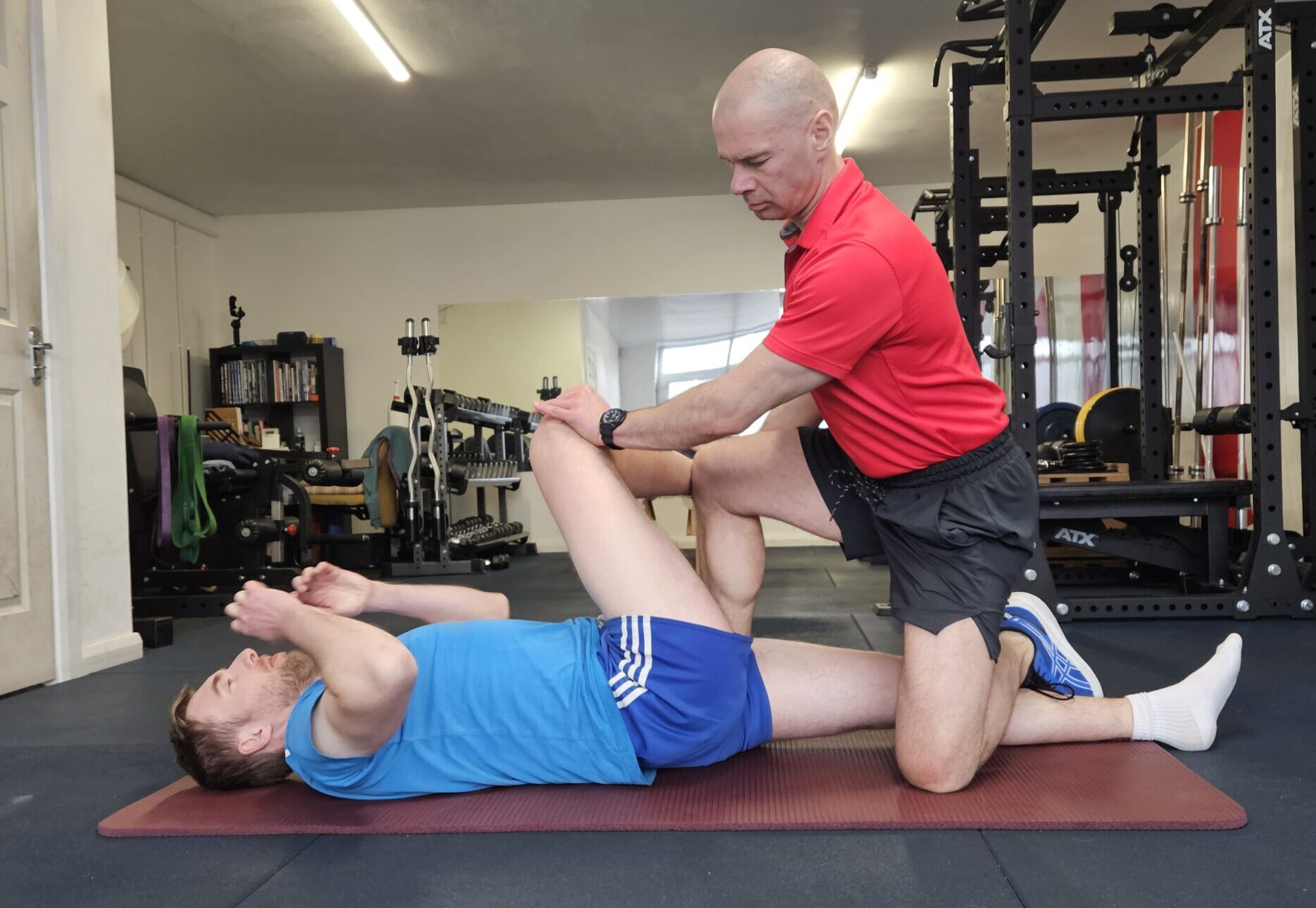
Flexibility: The Most Avoided Tool in Athletic Preparation
Flexibility for athletes is probably one of the most consistently avoided tools in athletic preparation.
For athletes already caught in the injury cycle, it can be the way out.
For athletes not yet in that cycle, it is one of the things that helps keep them out of it.
That might sound like a strong claim. So let me explain exactly what I mean.
Why Is Flexibility for Athletes So Underrated?
This is a hard claim to understand at first, because it is not as if we never hear about stretching.
We do.
But very little of what we hear about it is strictly positive.
The reason, in part, is modernity.
Modernity likes what we can measure, write down, package, and sell.
Look at strength training. It fits this world perfectly.
- Sets
- Reps
- Loading parameters
- Time under tension
- Progression
- Percentages
- Programmes
- Spreadsheets
Flexibility is almost the opposite of all of that.
Not because flexibility itself is vague, but because much of it must be felt, adjusted, tolerated, breathed into, relaxed into, and experienced.
As a result, flexibility does not reduce easily to a clean system. It does not fit neatly into a spreadsheet.
And in the metrics-driven culture of the twenty-first century, anything that we cannot easily quantify becomes immediately suspicious.
That is one side of the problem.
The other side is marketing.
Stretching Does Not Sell Well
To sell something to many people, it helps if that thing looks quick, simple, repeatable, and standardised.
Stretching massively fails that test because real flexibility work is individual.
It depends on position, sensation, tension, breathing, history, compensation, and most importantly, the person’s ability to actually feel what is happening.
So the industry tends to dismiss it, oversimplify it, or rebrand it as mobility to make it sound more active, measurable, and performance-friendly.
What Flexibility Actually Does
Flexibility is exceptional at decompressing the body.
That is its primary mechanism.
Not muscle length in isolation.
Not range for its own sake.
Decompression.
More specifically, joint decompression.
Compressed joints are one of the main reasons the body starts distributing load differently.
Joints dictate what muscles do. Not the other way around.
When a joint becomes compressed, a chain of events follows. Without going too far into the mechanics, the combined effect is simple: load stops moving through the body the way it should.
So the system compensates.
For a while, that compensation holds.
Eventually, it does not.
That is where recurring injuries live.
Not in bad luck.
But in a compressed system that has been loaded past what it can compensate for.
Flexibility helps remove that compression. When joints decompress, signals transfer more clearly and the body no longer needs to compensate in the same way.
The Second Problem
Understanding what flexibility actually does makes what happens in practice even harder to watch.
Picture the end of a training session.
Thirty lads, tired, standing pitch-side.
Someone calls a stretch.
One player gets picked to lead it.
He calls out a calf stretch.
Counts to six.
Switches.
Counts to six.
Done.
There is no position. No sensation. No awareness of what the body is doing or what it needs. No progression. No feel.
That is not flexibility work.
That is a ritual performed so everyone can say it was done.
Most Athletes Have Never Been Taught How to Stretch
In twenty years of working with athletes, more than a thousand people have told me they stretch regularly.
With one or two possible exceptions, not a single one of them knew how.
Not even close.
So the problem is not that stretching does not work.
The problem is that almost nobody has been taught what it actually is.
And that is precisely the point.
Flexibility is experiential by nature.
You cannot count it to six and call it done.
You cannot standardise it across thirty tired athletes on a pitch.
The athlete has to feel it, learn it, and develop it progressively.
That means coaches have to teach it that way first.
If you are already stuck in the injury cycle, this connects closely to our work on training after injury and why injuries keep coming back.
If you have never been taught how to experience it, what exactly have you been training?